Monster · Season 4 · The other timeline
Why is Aileen Wuornos in Monster: The Lizzie Borden Story?
Updated
The short version
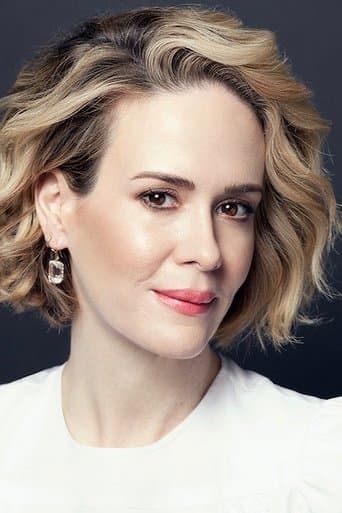
- Sarah Paulson plays Aileen Wuornos, the Florida serial killer executed in 2002, in a second timeline that runs alongside the 1892 Borden story.
- She has no documented connection to Lizzie Borden. The two lives are separated by almost a century; the link is the series' own argument about female rage, abuse, and who gets called a monster.
- On screen she appears in three places: a 1988 roadside killing in Episode 4, a stay at the Borden house in Episode 6, and her trial and execution in the finale.
- The final image — Lizzie and Maggie waiting for Wuornos after her execution — is invented. So is her visit to the bed-and-breakfast: the Borden house did not open to overnight guests until 1996, five years after her arrest.
Why the series puts her here
Every Monster season asks the same question: is a monster born, or made? The first three seasons asked it about men. Season 4 is the anthology's first built around a woman accused rather than a killer caught, and it reaches for a second woman to make the argument louder. Lizzie Borden is the nineteenth-century legend — acquitted, never explained, turned into a skipping rhyme. Aileen Wuornos is the late-twentieth-century case the press called America's first female serial killer.
The series uses each one to read the other. Lizzie's household is shown as a place where a daughter is mocked, controlled, and left unprotected; Wuornos's life is shown as a longer version of the same thing, ending on a Florida highway. Ella Beatty has said Ryan Murphy and Ian Brennan were interested in mapping a connection between the two women. That connection is thematic. It is not a historical claim, and the series never pretends to have found one in the record.
It is also a structural trick the anthology has used before. Season 3 put Ed Gein in a line of descent with the horror films he inspired; Season 4 does the same with a story that outlived its facts. Wuornos is shown reading the Borden legend, sleeping in the Borden house, and borrowing Lizzie's name — the legend as something a later woman can inherit.
Every Wuornos scene, episode by episode
Episode 4 — R.I.P. (Rest in Pestilence) Abby Borden
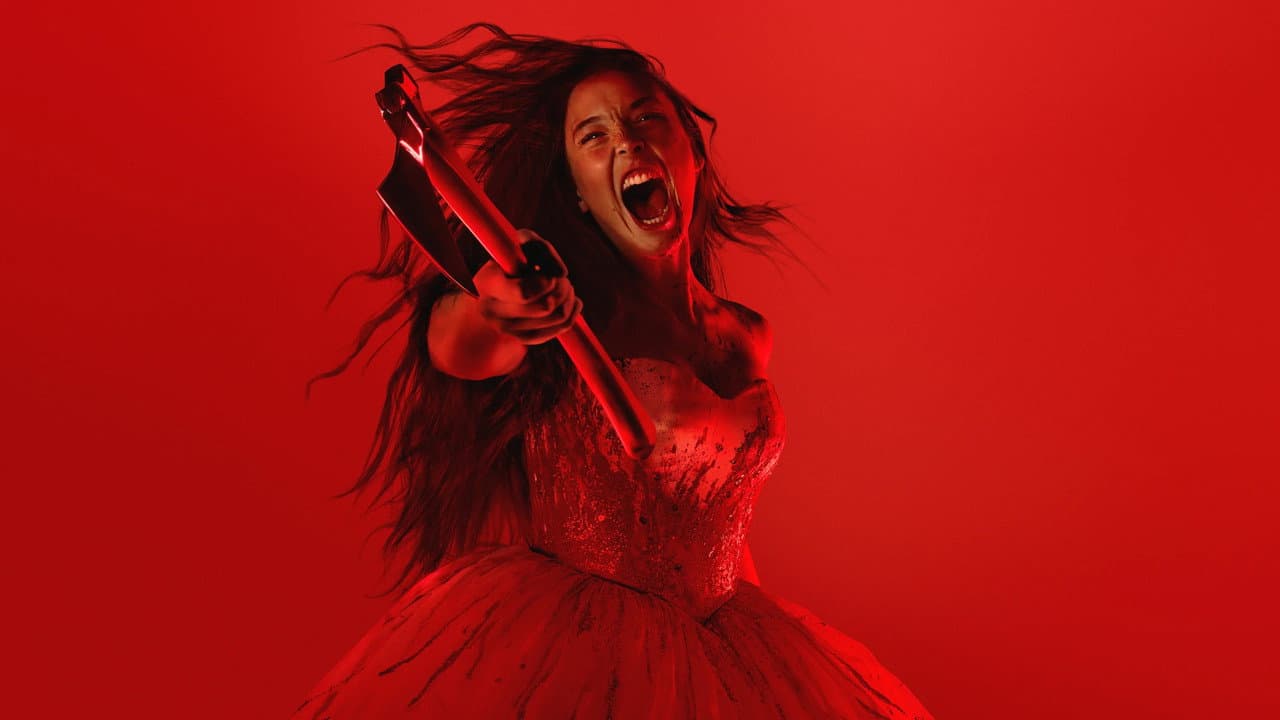
The hour opens on a Florida roadside in 1988. A hitchhiker gives her name as “Lizzie Borden” before admitting she is Aileen Wuornos. The driver assaults her in a field and tries to leave; she shoots him, and for a moment the gun in her hand becomes a hatchet.
Later, at a roller rink, she reads a book about the Borden case with her girlfriend and fixes on two details — the stepmother who killed Lizzie's birds and the father who did nothing. The series makes the reading the bridge: Wuornos sees in Lizzie a warning she thinks the world needed.
Episode 6 — Bed and Breakfast
Immediately after the 1892 killings, a knock at the door turns out to belong to a later century: Wuornos and her girlfriend arriving for a reservation at the Borden house, now a tourist bed-and-breakfast. They tour the rooms, read the rhyme aloud, and stay the night.
That night Wuornos finds Lizzie sitting by candlelight. She tells her she understands what she did and confesses her own killings of men who picked her up. Lizzie touches her face. As the couple drives away the next morning, Wuornos sees Lizzie in the window — and the 1892 police arrive to make their arrest.
Episode 8 — Carnival
The finale frames Lizzie's later life with Wuornos's end. The series gives her a trial, a death sentence, and interviews in which she insists she is not the monster the press describes — “just another woman put to death for something a man would've gotten away with,” as one line puts it.
On the execution table she opens her eyes and finds Lizzie and Maggie waiting to take her somewhere safe. Then the curtain closes on the real execution room. The ending explainer covers how that image closes the season's argument.
The real Aileen Wuornos case
Wuornos was a real person whose victims had names and families. The outline below is the documented case, kept apart from the series.
February 29, 1956
Born in Rochester, Michigan. She is later raised by her maternal grandparents.
1986
Begins a relationship with Tyria Moore, a motel maid, in Florida.
November 30, 1989
Kills Richard Mallory, the first of seven men killed along Florida highways.
May–November 1990
Six more men are killed: David Spears, Charles Carskaddon, Peter Siems, Troy Burress, Charles Humphreys, and Walter Antonio.
January 9, 1991
Arrested at The Last Resort bar in Volusia County. Days later, recorded calls with Moore help produce a confession.
January 27, 1992
Convicted of Mallory's murder. Through later pleas she receives six death sentences in total.
October 9, 2002
Executed by lethal injection at Florida State Prison.
The series vs. the record
| Question | The series | The record |
|---|---|---|
| A link to Lizzie Borden | Wuornos reads about the case, borrows Lizzie's name, and is welcomed by her in death. | None documented. No source connects Wuornos to the Borden case, the book, or the house. |
| The 1988 roadside killing | Episode 4 stages a killing in 1988 as her first on screen. | Her first known victim, Richard Mallory, was killed on November 30, 1989. The 1988 scene is a dramatized composite, not a dated case. |
| A night at the Borden house | Wuornos and her girlfriend book a room at the bed-and-breakfast and meet Lizzie's ghost. | Impossible as dated. The house opened as a bed-and-breakfast on August 4, 1996. Wuornos had been in custody since January 9, 1991. |
| Her claims of abuse | The series treats a life of abuse as the root of her violence. | Wuornos described abuse in childhood and violence from clients; at trial she claimed self-defense for the first killing. The jury rejected that claim. |
| The execution | Lethal injection, followed by an afterlife reunion. | She was executed by lethal injection at Florida State Prison on October 9, 2002. The reunion is the series. |
Not the 2003 film
The 2003 film Monster, with Charlize Theron as Wuornos and Christina Ricci as a character based on Tyria Moore, is unrelated to Netflix's Monster anthology despite the shared title. Paulson's version is a supporting thread inside a Lizzie Borden season, not a Wuornos biopic, and it compresses and rearranges her case to serve that story.
Questions
Why is Aileen Wuornos in Monster: The Lizzie Borden Story?
As a deliberate cross-century parallel. The series pairs Lizzie Borden with Aileen Wuornos to ask how abuse, rage, and public appetite turn a woman into a “monster.” Ella Beatty has said the creators were interested in mapping a connection between the two. There is no historical link.
Did Aileen Wuornos have any real connection to Lizzie Borden?
No. Lizzie Borden was tried and acquitted in 1893 and died in 1927; Wuornos was born in 1956. No record ties Wuornos to the Borden case, and her visit to the Borden house in the series could not have happened as shown — it opened as a bed-and-breakfast in 1996, after her 1991 arrest.
Which episodes is Aileen Wuornos in?
Episode 4 (R.I.P. (Rest in Pestilence) Abby Borden), Episode 6 (Bed and Breakfast), and Episode 8 (Carnival). Sarah Paulson plays her in all three.
Who plays Aileen Wuornos in Monster Season 4?
Sarah Paulson. Charlize Theron played Wuornos in the 2003 film Monster, a separate project that won her the Academy Award for Best Actress.
What does the ending with Lizzie and Aileen mean?
After Wuornos is executed, she sees Lizzie and Maggie waiting to welcome her. The image is invented. It gives two women from different centuries the forgiveness the series argues neither received, and ends the season on the anthology's question of whether monsters are born or made.
How many people did Aileen Wuornos kill?
She was convicted of or pleaded to six murders and is generally linked to seven men killed in Florida between November 1989 and November 1990. One victim's body, Peter Siems, was never found.
Sources & further reading
- Wikipedia — Aileen Wuornos — Victims and dates, arrest, convictions, and execution, with citations to court and news records.
- TODAY — Why is Aileen Wuornos in Monster: The Lizzie Borden Story? — Ella Beatty on the creators' interest in a connection between the two women.
- Wikipedia — Lizzie Borden House — The house's history and its opening as a bed-and-breakfast museum on August 4, 1996.
This page describes real killings and a real execution. It does not endorse the series' framing, and it names victims only as the public record does.